$RIVN Long

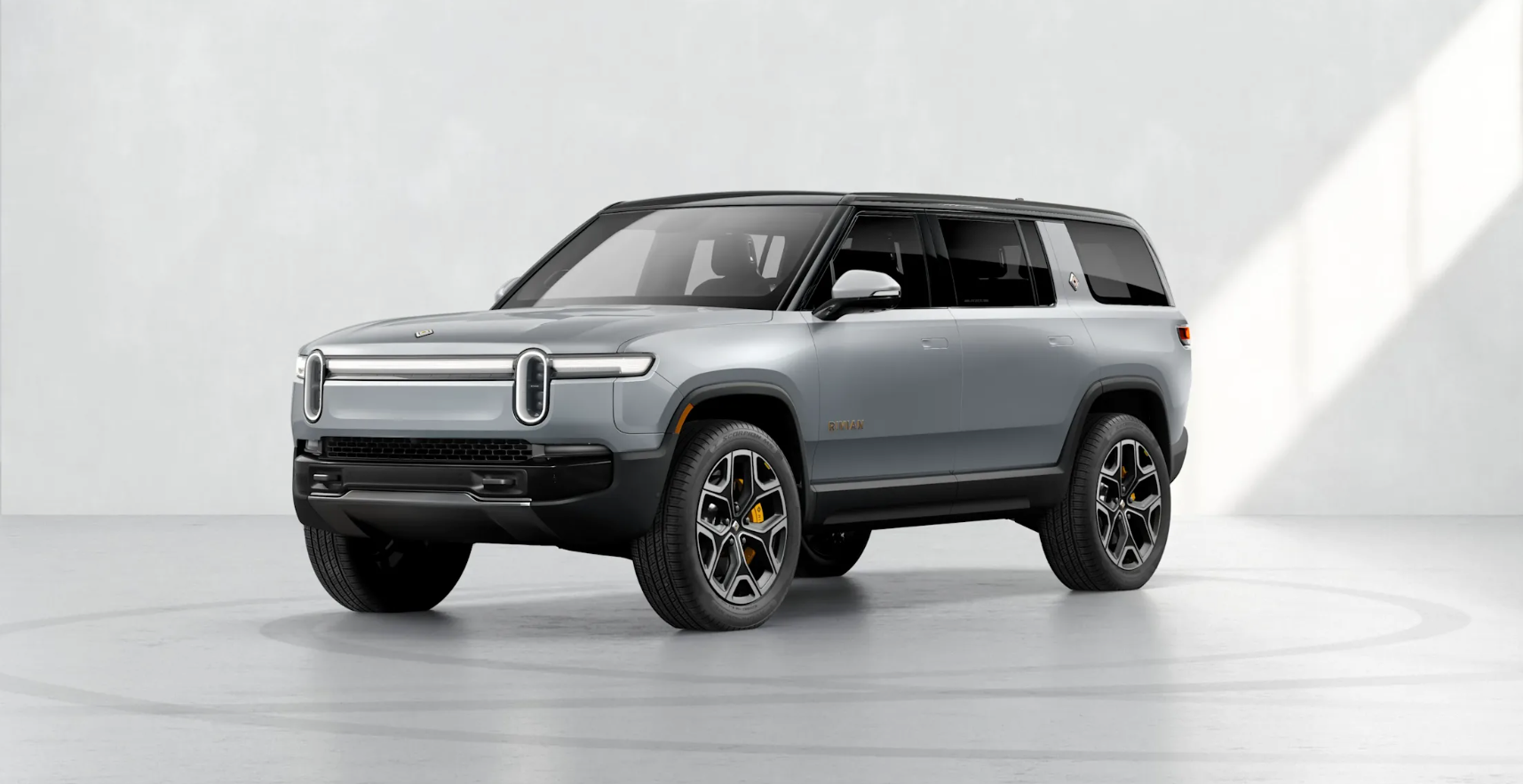
I'm putting 20% of my net worth into $RIVN for a 5 year+ hold, similar to big bets I made previously on $UI in October 2023 and $MCW in October 2025.
The point of this post is not to convince anyone they should do the same, it's to share my thought process behind the investment and get feedback from other investors for/against my position.
You should only buy if you have a strong understanding of the fundamentals of the business, management, competition, and potential risks and rewards.
The reason is you have to really believe to survive the ups and downs of the stock price and hold longterm.
If you buy based on a stock tip, you'll either sell when it goes down out of fear, only to watch it rebound, or sell out of greed when it doubles, missing the 10X that follows.
As an investor I buy underlying businesses not stock prices. I didn't flinch when I lost 10% in a few weeks on $MCW or doubled my money in a year on $UI.
I stuck to my longterm plan.
So anyways here's why I'm buying up Rivian shares right now...
Legacy automakers and investors misunderstand EV buyers.
As a Tesla Model 3 and Rivian R1S owner
- I don't care about the self-driving or AI tech, I don't even use it
- My purchase decision has nothing to do with political party
- I didn't purchase with green energy or carbon footprint in mind
- It's not about saving money on gas
- I don't get "charge anxiety" but did get "low gas anxiety" before
EV is simply a 10X user experience over our gas vehicles
- It's the EV 0-60 faster than a Lamborghini
- It's walking up to/away from your EV and it unlocks/locks without having to pull your key out
- It's instant heat in the winter without waiting for the engine to warm up
- It's never having to stop and fill up gas when you're running late
- It's never having to get an oil change
We put 80,000 miles on the Tesla and the only service done was new brakes and tires... one time.
My wife previously had a Chevy Tahoe and I sold my Chevy Silverado to get a Tesla Model 3.
Then it became a "who gets to drive the Tesla" talk anytime we both have to go somewhere.
So now she has a Rivian R1S.
Another common misunderstanding for non-EV owners is with charging.
We charge every night at the house.
90%+ of the time we don't drive more than the battery 300 mile range in a day.
We basically never think about the battery at all.
Rarely, maybe once per month, we have to stop to use a supercharger on our way somewhere 4+ hours away. It takes 30 minutes. We would have stopped to eat/use the bathroom anyways. It's not a big deal.
Legacy automakers and investors who don't drive EVs don't get it.
Legacy automakers are done for
Legacy automakers aren't going to make the transition because they lack the tech skillset, focus, and leadership.
Gas vehicles may exist for some use cases but will increasingly become a niche market over time.
Ford CEO says 'the customer has spoken' after its EV business lost nearly $5 billion last year
After massive losses, Ford is discontinuing the F150 Lightning this year. The CEO is clueless about EV.
Every legacy automaker has bled too much on EV and is refocusing in 2026, discontinuing EV vehicles and R&D to focus again on making a profit with gas vehicles.
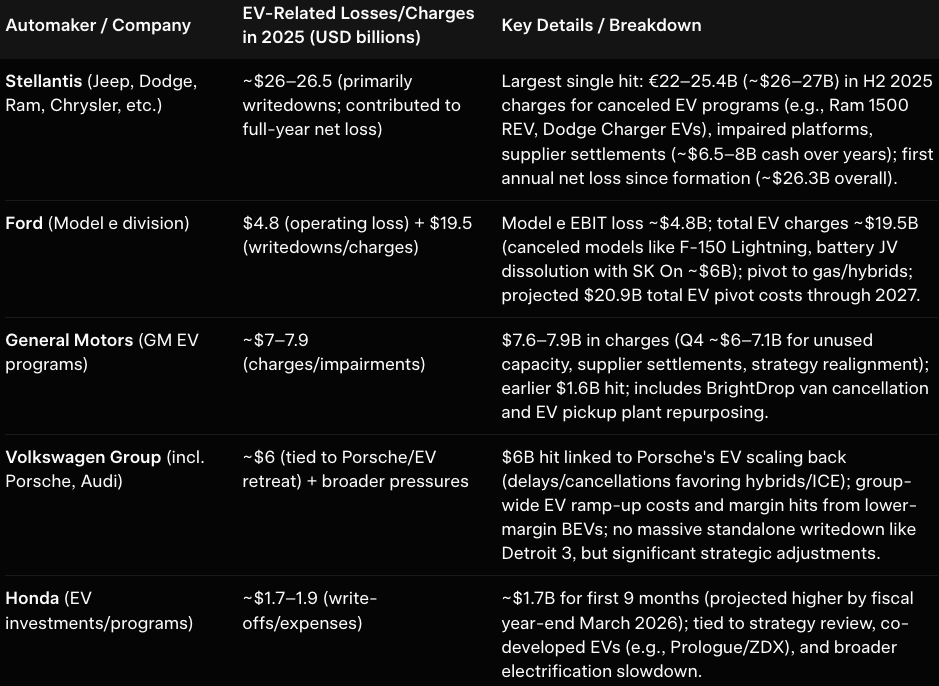
“The reset we have announced today is part of the decisive process we started in 2025, to once again make our customers and their preferences our guiding star. The changes announced today largely reflect the cost of over-estimating the pace of the energy transition that distanced us from many car buyers’ real-world needs, means and desires.” Stellantis (Jeep, Dodge, Ram, Chrysler) – CEO Antonio Filosa
Ford and Stellantis CEOs, instead of admitting defeat, actually said they failed because the customers don't want EV.
GM CEO Mary Barra at least acknowledged EVs are the future while admitting GM was losing.
“We had to make some fairly significant changes,” Barra said, referring to decisions to cut billions of dollars' worth of EV investments while leaning in harder to combustion-engine vehicles. She said GM will continue to focus more on EVs because they are a superior product for customers. “It will take longer without the incentives, but I still think we’ll get there over time… EVs [remain] the end game.”
Legacy lacks a key technology... and it's not batteries or AI
Legacy auto's biggest problem is that they don't own the vehicle software stack end to end.
This is more difficult than batteries, and more important than AI.
Owning the software stack matters for winning at user experience.
It's also a pre-requisite for AI data collection to potentially enable self-driving in the future.
Here's a quote from Ford CEO Jim Farley describing the problem:
“We have about 150 of these modules with semiconductors all through the car. The problem is the software is all written by 150 different companies, and they don't talk to each other. So even though it says Ford on the front, I actually have to go to (supplier) Bosch to get permission to change their seat-control software... We call it the ‘loose confederation of software providers.’ One-hundred-fifty completely different software programming languages. All the structure of the software is different. It’s millions [of lines] of code.”
On the flip side here's a quote from Rivian founder and CEO RJ Scaringe:
“The legacy OEM approach is almost the exact opposite of how you would architect a system if you started with a clean sheet... You would say, ‘Let’s have the smallest number of computers in the car that make all the decisions.’ And so you’d end up with what we now call a zonal architecture... that do all the decisioning across one common software platform running on a standard in-house-built OS.”
Tesla and Rivian are the only US manufacturers who wrote the software for the vehicle end to end.
This is an underrated key advantage Rivian has over all other EV producers.
What about Tesla?
Tesla is still the best. Legacy automakers will fail.
But Tesla isn't going to own the entire EV market.
People buy cars for a mix of practical, financial, and emotional reasons.
There's going to be a market for both low-cost and luxury.
There are also different practical purposes for vehicles.
Most importantly people identify with specific brands which resonate with their own values and aspirations.
Rivian has built an incredible brand with its user experience, design, and appeal to a specific audience. Tagline "Keep the world adventurous forever."
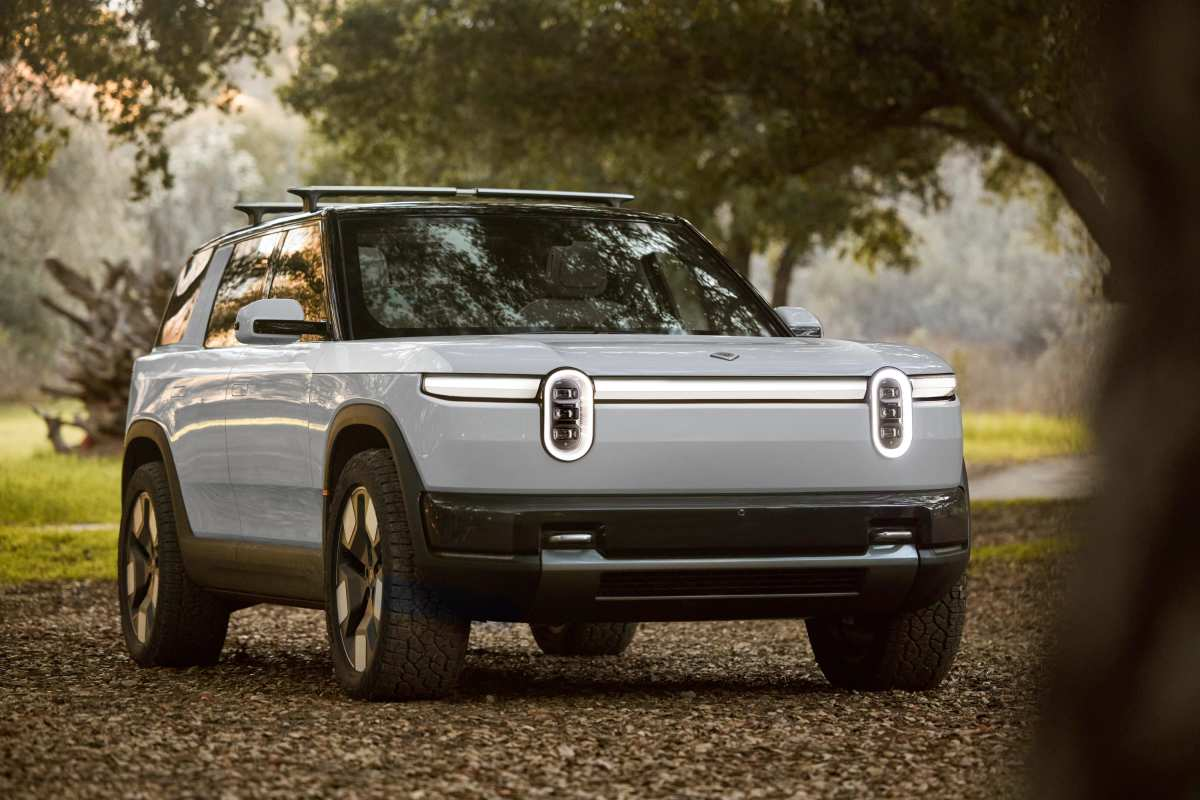
Rivian is producing the most compelling SUV and truck EV lines in the market right now... vehicle types which dominate the US top 10 vehicles sold year after year.
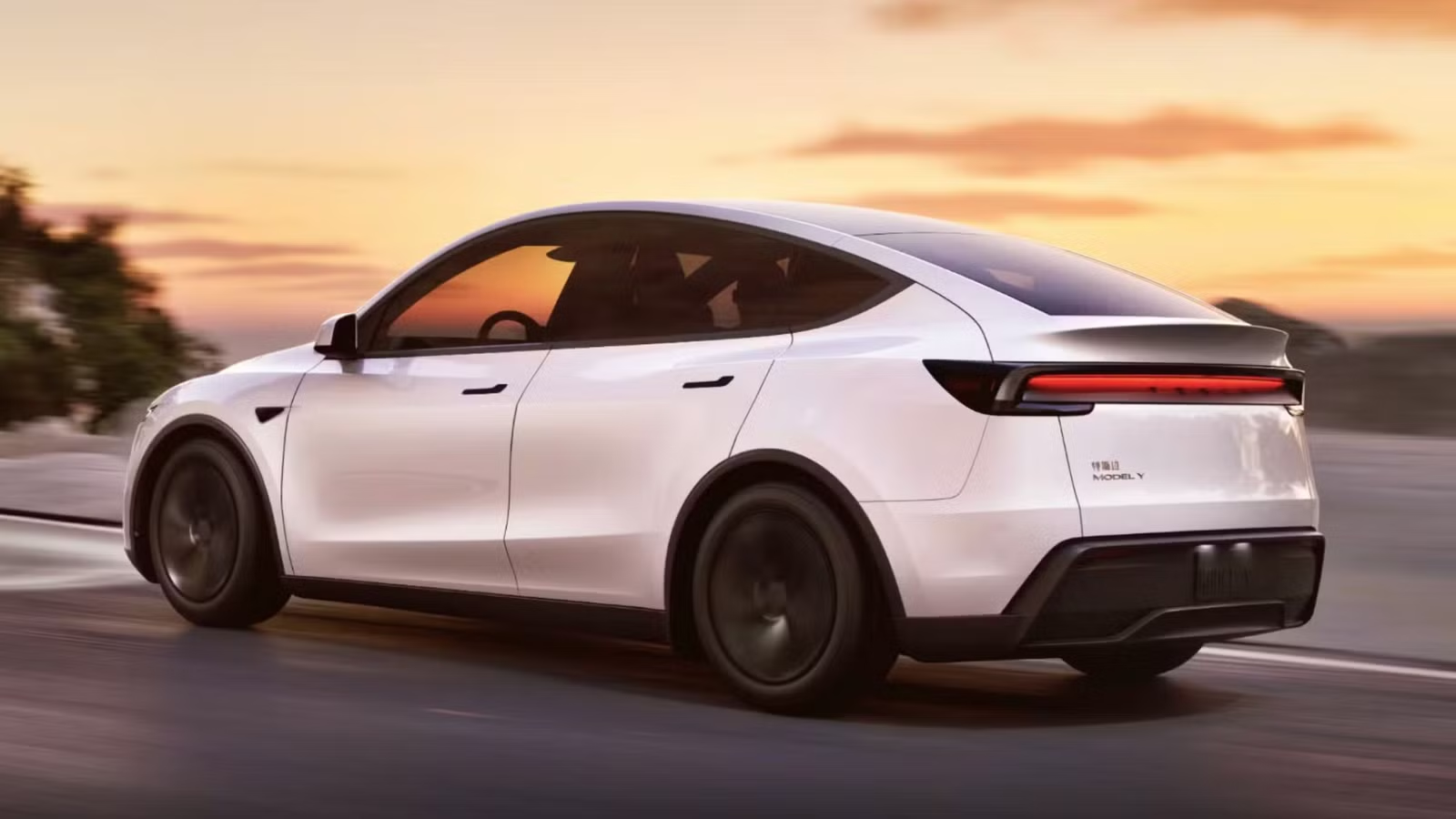
The Model Y was the #4 top selling vehicle in 2024 out of ALL vehicles, not EVs.
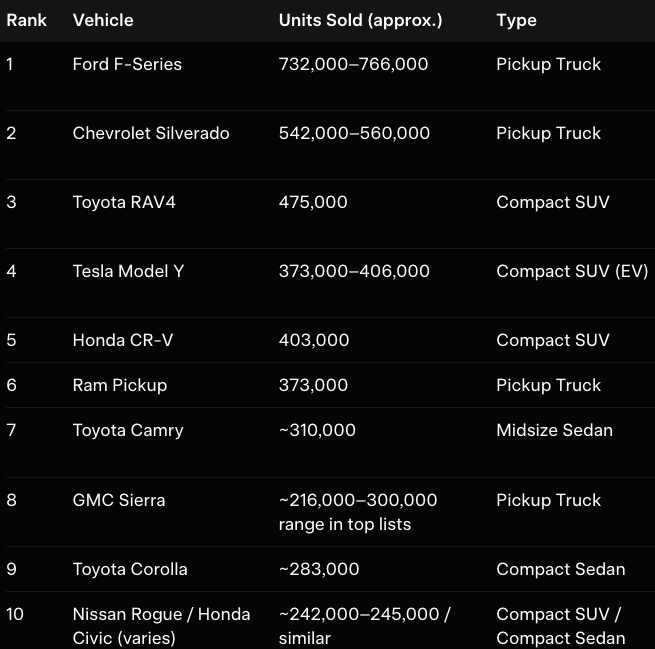
The Model Y is ugly in comparison to a Rivian R2.
The R2 will crush Model Y numbers if Rivian can execute and ramp production.
What about Chinese EVs?
BYD and NIO are Chinese low cost EVs have been considered by some investors to be a competitive risk to Tesla and Rivian.
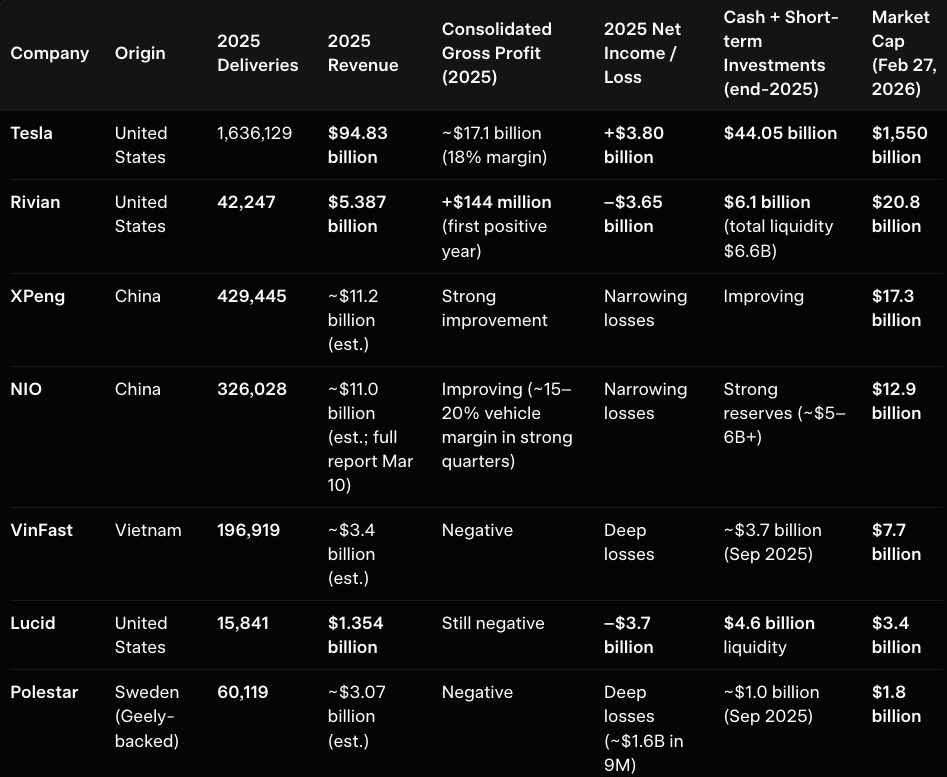
There are a few others like XPeng and VinFast doing delivery numbers higher than Rivian.
They're producing EVs at a price point of $25K on average.
I didn't include BYD delivery numbers in the table below because BYD is selling a lot of hybrids in addition to EV, so it's not a fair comparison.
Warren Buffet invested $230M in BYD for a 10% stake in 2008 and fully exited the position in 2025.
He spoke very positively of BYD founder Wang Chuanfu on several occasions calling him a genius and Charlie Munger stated BYD was crushing Tesla in China.
Brand Resonance
I watched a BYD Sealion review...
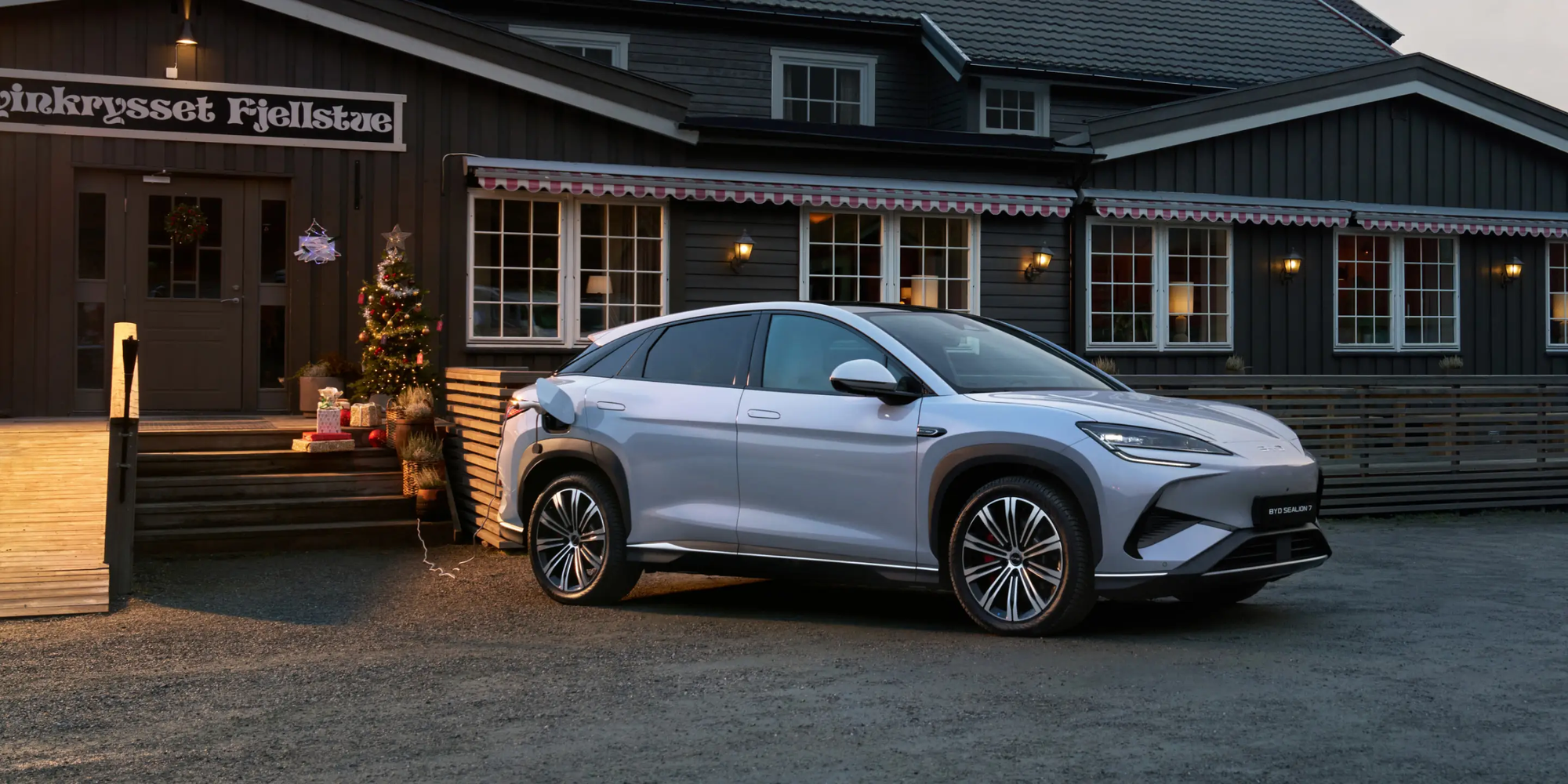
I'm sure it has a place in the market as a budget vehicle but it doesn't look like a compelling brand, design, or user experience.

Same with NIO, Xpeng, and VinFast.
The only decent looking Chinese EV is the Xiaomi SU7, it looks somewhat like a Porsche.
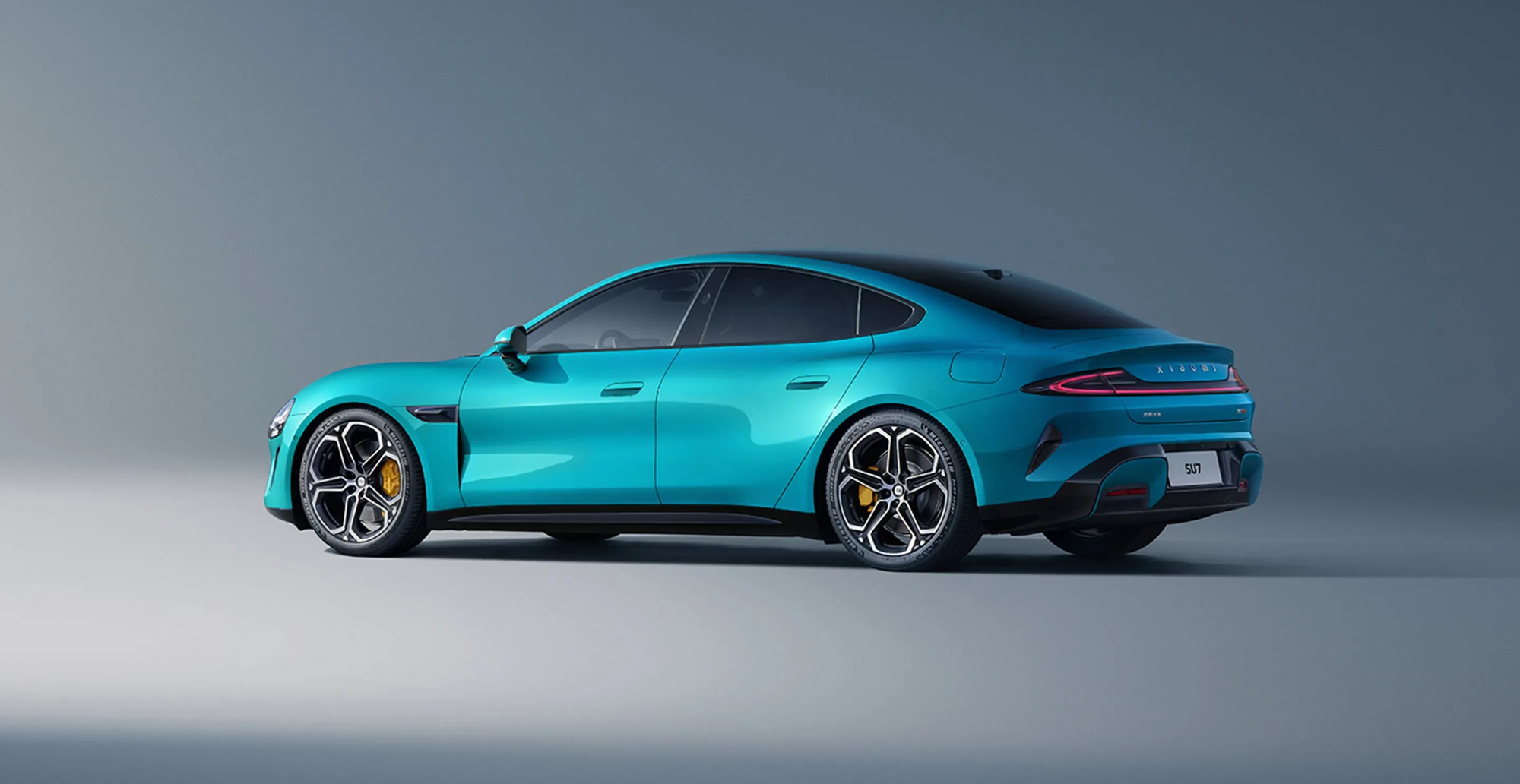
I didn't find any EV brands that are compelling other than Tesla and Rivian... but the great thing is multiple manufacturers can win.
People buy cars for many different reasons.
Chinese EV pricing
Let's dig into that pricing...
The $25K price point on these Chinese vehicles is often cited as a major risk for US EV manufacturers.
In an interview, Rivian CEO RJ Scaringe explained how these vehicles are being produced so cheaply.
He said there's no magic.
Chinese EV producers have tons of free capital for R&D and production losses backstopped by the Chinese government.
They also have an abundance of low cost labor... people who will work 50-60 hours per week while making somewhere between one-fifth and one-seventh of what someone in the United States would make.
RJ emphasized that if these advantages are removed these companies are forced to compete outside of China they won't be able to produce vehicles at a price point competitive with US manufacturers.
Historically, long before the current US administration's China tariffs, Chinese car imports have faced high tariffs and local production requirements.
Additionally, with the surveillance tech and cameras built into Chinese EVs, it's even more unlikely they will be allowed into the US by a future administration for national security reasons.
These trade barriers remove the risk of Chinese EV price point competition in the US.
Chinese EV tech
Rivian CEO RJ Scaringe has spoken positively about Chinese EV tech.
Regarding the Xiaomi SU7 (after Rivian tore one down for benchmarking): Rivian CEO RJ Scaringe called it "nicely done" and "really well executed," saying it would be one of the cars he'd consider buying if living in China. He noted there's "nothing new to learn" technically but praised the overall execution.
Business Insider interview, October 2025.
RJ is an underrated founder CEO
Here's what Bezos had to say about him:
@RJScaringe is one of the greatest entrepreneurs I've ever met. -Jeff Bezos
Listen to this podcast and you'll see why.
RJ is a highly technical CEO with a proven ability to execute.
He has financial incentives for the longterm success of Rivian with an incredible Elon/Tesla like compensation package that I'll break down in a bit...
I've listened to, watched, and read every interview I could find with him.
In a lot of his interviews he sticks to the same script of talking points, but every once in a while some small additional detail slips through.
He's patient
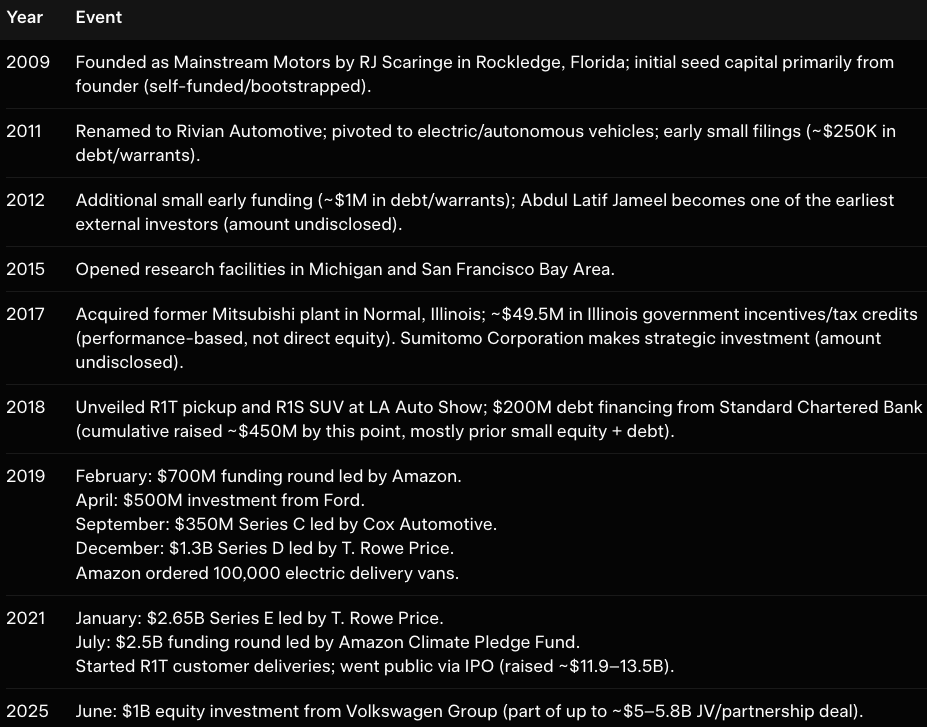
He started Rivian in 2009 and worked at it the entire time, scraping by with personal funding, debt, and a $1M raise in 2012. It was basically nothing until 2017. He's in this for the long run.
He's humble
He's constantly given opportunities by reporters to compare himself to Elon Musk and Rivian to Tesla.
He always dodges rather than indulging in this.
In this 2018 interview where the interviewer asks,
"Some people are saying you're a young Elon Musk, is that because the vehicle is electric powered or what can you tell me?"
He ignores the Elon comparison entirely and just says Tesla has done a great job, but that Rivian wants to build for a different segment.
In other interviews RJ is quoted as saying,
"I’ve owned multiple Teslas. I think the world’s better because Tesla’s here."
and also:
"We let the products do a lot of the speaking."
This sounds a lot like another quiet and relentless founder I know... Robert Pera.
He's relentless
RJ said in an interview "I’m not by any means shy, but I’d rather put my head down and focus on execution."
Watch this 2018 interview and then listen to this 2025 interview.
They might as well have been recorded a week apart.
When interviewer asks if we will see Rivian release a sedan, RJ replies, "For us our brand is really focused on what we think about as the adventure space, vehicles that are designed to drive on any surface."
The mission never changed.
He's heavily financially incentivized
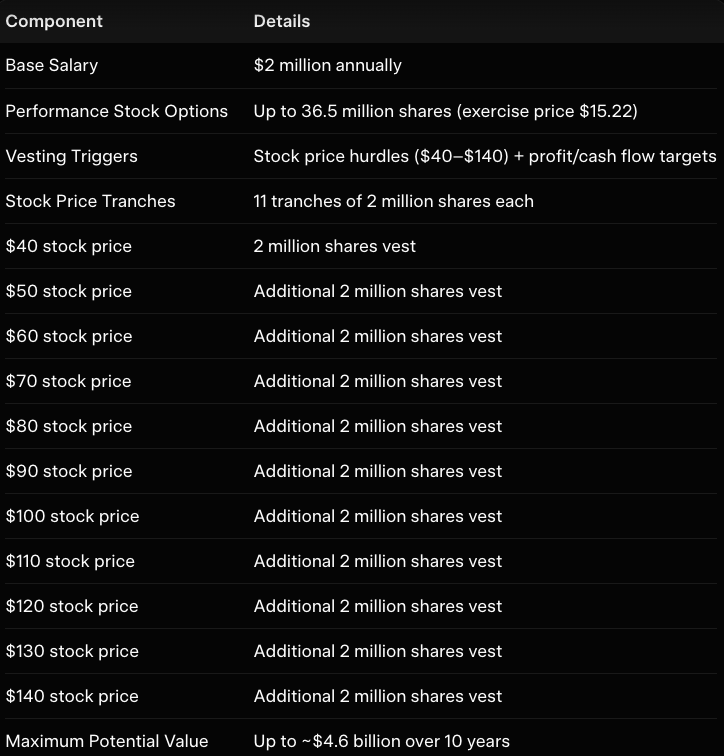
RJ negotiated a "Musk-style" compensation package from which he could earn up to $4.6B over the next 10 years with payouts for every $10 stock move starting at $40.
Today he's worth $56M with 3,679,794 shares.
So the financial upside potential relative to his current net worth is massive.
Investment risk reward
Downside
I'd be surprised if it goes below $14 based on fundamentals, a 14% risk from my dollar cost averaged buy-in at $16.19.
Upside
10X in 5 years if they get to 500,000 vehicles delivered in 2031, a somewhat conservative best case estimate with some analyst predictions of 1M deliveries if they follow the footsteps of Tesla's 2016-2021 ramp up trajectory.
Technicals and fundamentals
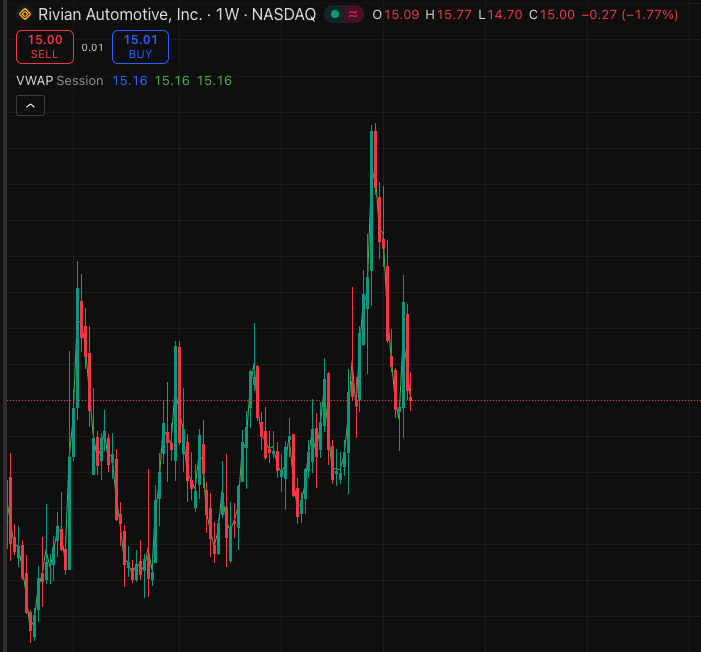
Higher lows since Q4 2024
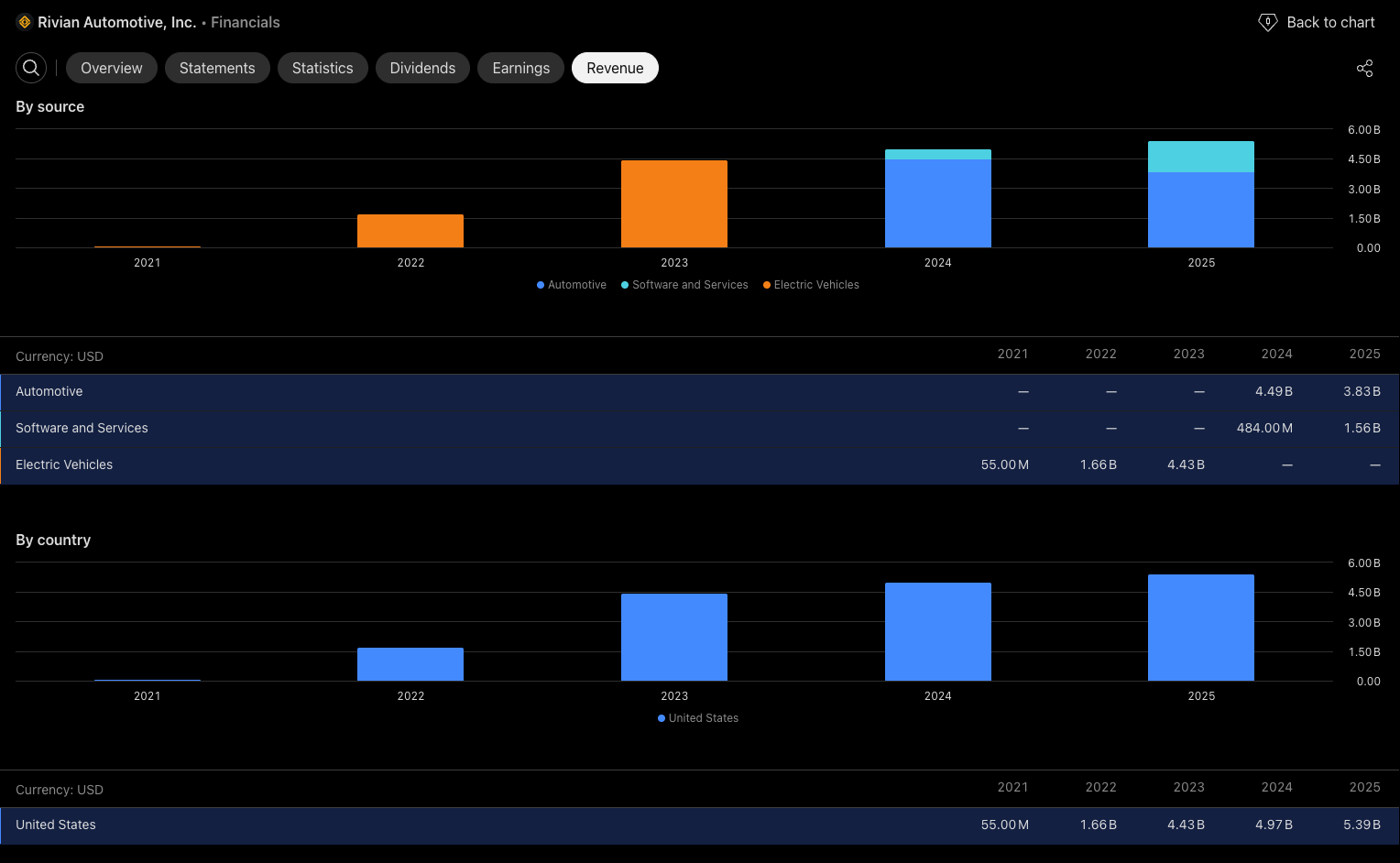
Revenue growing YoY
Consistently beating earnings estimates
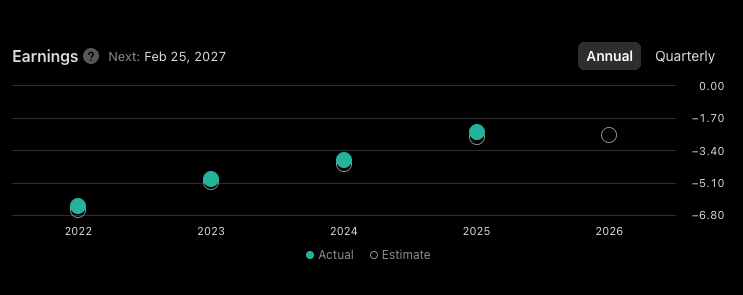
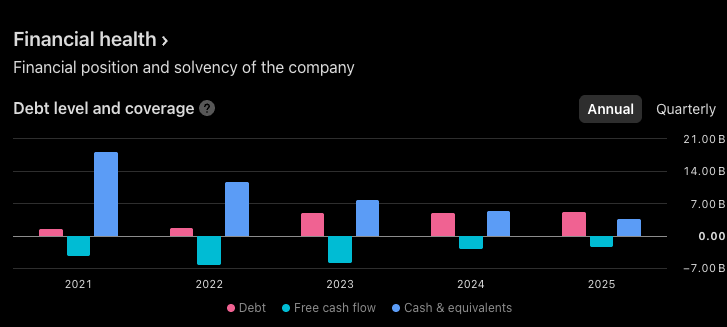
Debt increasing, free cash flow decreasing
They're running out of cash and 2026 is a pivotal year with R2 production
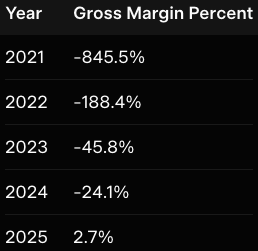
Margins drastically improving YoY
First ever gross profit in 2025 of $144M, a massive turnaround from a $1.2B loss in 2024
2026, an inflection point for Rivian
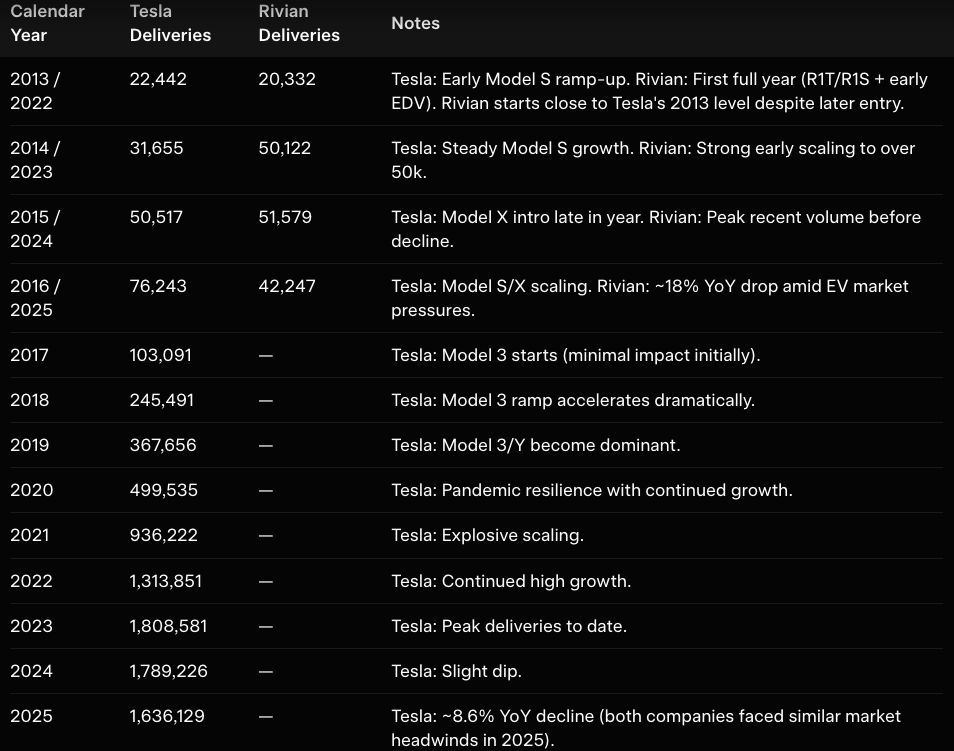
Tesla launched the Model 3 in 2016, Rivian is launching their equivalent price point R2 in 2026.
Rivian set guidance at 62K deliveries for 2026, so that will be more comparable to Tesla's 2016 Model 3 first year of production in 2016.
Where it's going to get interesting is 2027 and beyond if they can ramp R2 production and meet the demand like Tesla did with Model 3.
I don't have concerns about the demand for the R2, for me it's a matter of whether they can produce enough and achieve profitability per vehicle.
A big bet
I placed a big bet on this, proportional to the amount of research I've done and will continue to do. The bet I'm making is ~20% of my net worth.
I didn't even get into the $5.8B deal with VW, potential for future partnerships at software margins, Amazon's $1.3B investment, or the 100,000 EV vans Rivian is building for Amazon... because to me these are side quests which are a distraction from building their own business with 15% profit margins per vehicle.
But they could become important, and definitely cap the downside risk of bankruptcy.
Looking for feedback
If you're a Rivian investor, long or short, I'd love to hear from you. Email me rchase@rchase.com.